How to Turn an App Idea Into a Focused First Release
A practical way to choose what version one needs and what can wait.

Start With the Valuable Action
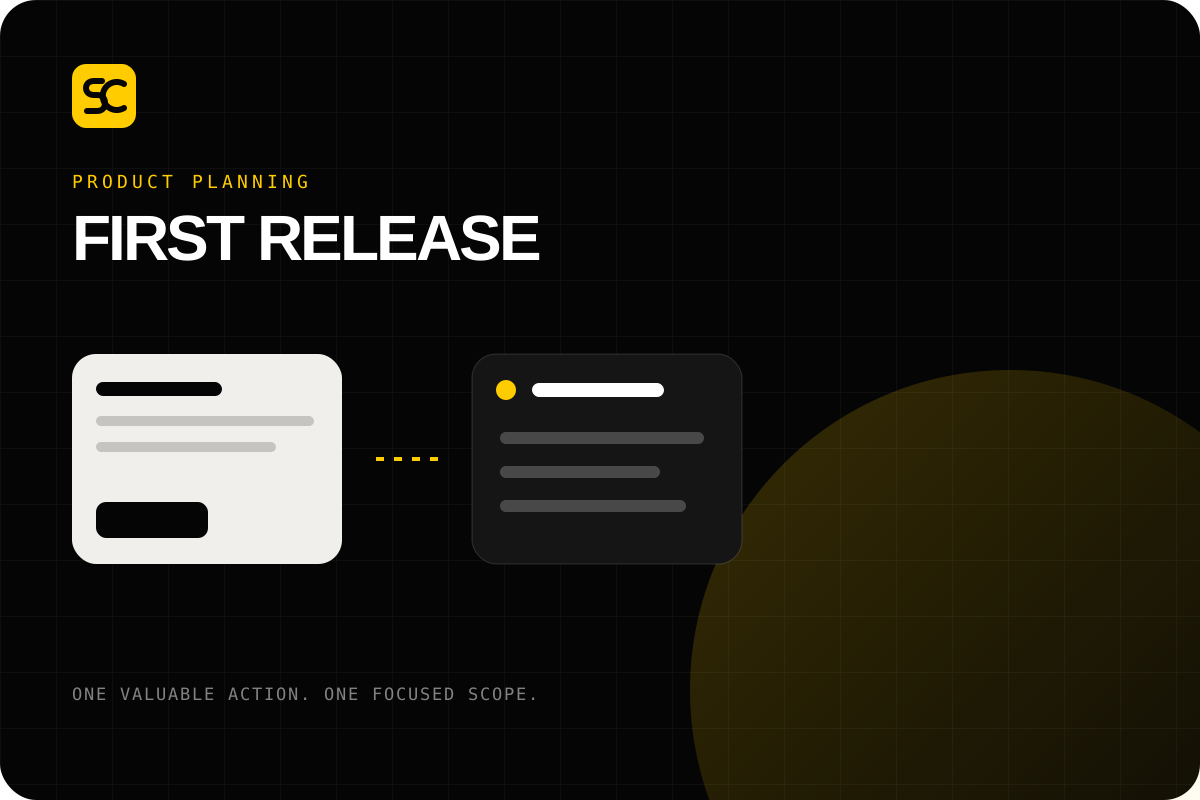
A first release becomes easier to scope when everyone agrees on the one action a user must be able to complete.
For a booking product, that action may be choosing a time and confirming an appointment. For an internal tool, it may be turning a request into an approved quote.
Why Feature Lists Grow Too Fast
Before you add a feature, ask:
- Does the user need this to complete the core action?
- Does the business need this to operate the first release?
- Can we learn the same thing with a simpler step?
These questions separate launch requirements from useful ideas that can wait.
What gets postponed is not lost:
Useful ideas stay visible without delaying the core release.
It is moved into a clear next-step list.
A Smaller Scope Is Not a Smaller Ambition
A focused release is not a cheap imitation of the full vision.
It is the fastest responsible way to test the most important assumption.
A smaller first release can mean:
- One role instead of five
- One complete workflow that people can finish
- One useful report instead of every possible metric
- One reliable integration instead of several fragile ones
The difference is simple:
One product demonstrates activity. The other creates a usable result.
Decisions That Prevent Rework
Small product decisions compound.
Write down what the release includes, what it excludes, and how success will be observed.
Why Projects Lose Momentum
It is rarely a shortage of effort.
It is unresolved decisions.
When every change requires:
- Reopening the original goal
- Waiting for several people to agree
- Working around unclear ownership
the build slows and confidence drops.
A written scope reduces decision overhead.
Avoid Premature Architecture
There is one important counterpoint:
focused does not mean careless.
Watch for:
- Abstracting before the workflow is understood
- Building for scale the product does not have
- Adding systems for problems no user has reported
That is not preparation.
It is complexity without evidence.